
Can a simple idea solve a complex conservation problem? In Kapilvastu, Nepal, we are learning that sometimes it can.
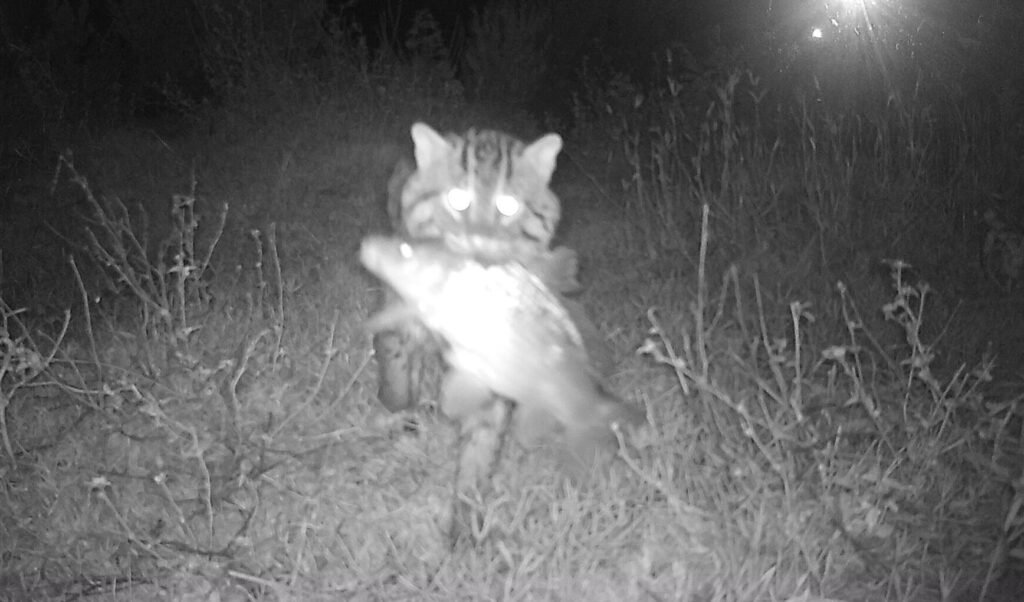
For years, fishing cats and fish farmers have shared the same landscape. The wetlands, canals and ponds that support local livelihoods also provide habitat for fishing cats. But this shared landscape created conflict. Fishing cats sometimes entered fish ponds and took fish. For the cats, this was simply natural hunting behavior. For farmers, however, every fish lost meant a loss from the income that supported their families. Some farmers became very negative toward fishing cats, and retaliation became a serious threat. We realized that simply asking farmers not to kill fishing cats would not solve the problem. If we wanted farmers to tolerate the cats, we also needed to understand and respond to their loss.
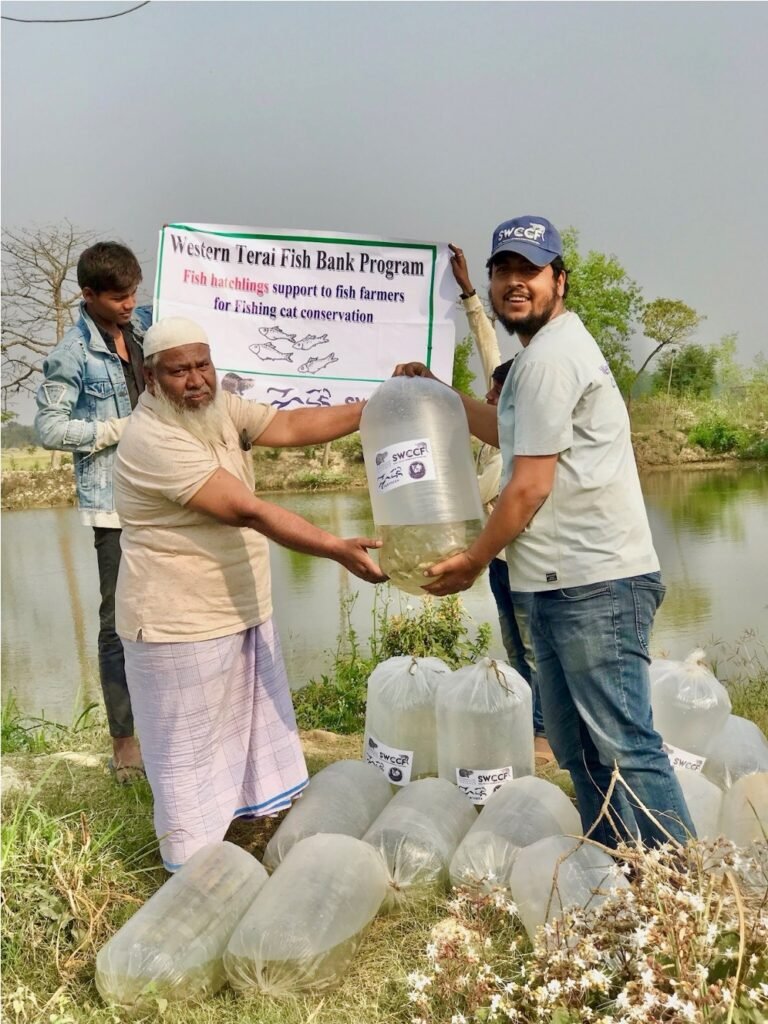
The first Fish Bank was established in Shivaraj, Kapilvastu, in 2021. Instead of using only cash compensation after a loss, we provided fish fingerlings to participating farmers. The idea was simple: if fishing cats take some fish, the Fish Bank helps farmers replace part of what they lose. At the same time, participating farmers contribute a small portion of their fish-farming profits to a community Fishing Cat Conservation Fund, which our project supports with a matching contribution.
Farmers started seeing fishing cats differently. They knew that they were not being asked to carry the entire cost of conserving a threatened species. Slowly, a relationship that had been built around loss and anger began moving toward tolerance and coexistence. As the approach expanded to other communities, the change went beyond simply accepting fishing cats. Fish farmers began participating directly in conservation. They helped us monitor fishing cats, supported camera trapping, reported sightings and became involved in protecting wildlife in their landscape. The people we initially approached because of conflict were becoming our conservation partners.
Ari Khan is the son of one of the fish farmers involved in our Fish Bank Program. Through the program and the conservation activities happening around his community, Ari became increasingly curious about wildlife. One day, he asked us how he could enter the wildlife conservation field and build a career working to protect animals.
That question was a special moment for us.
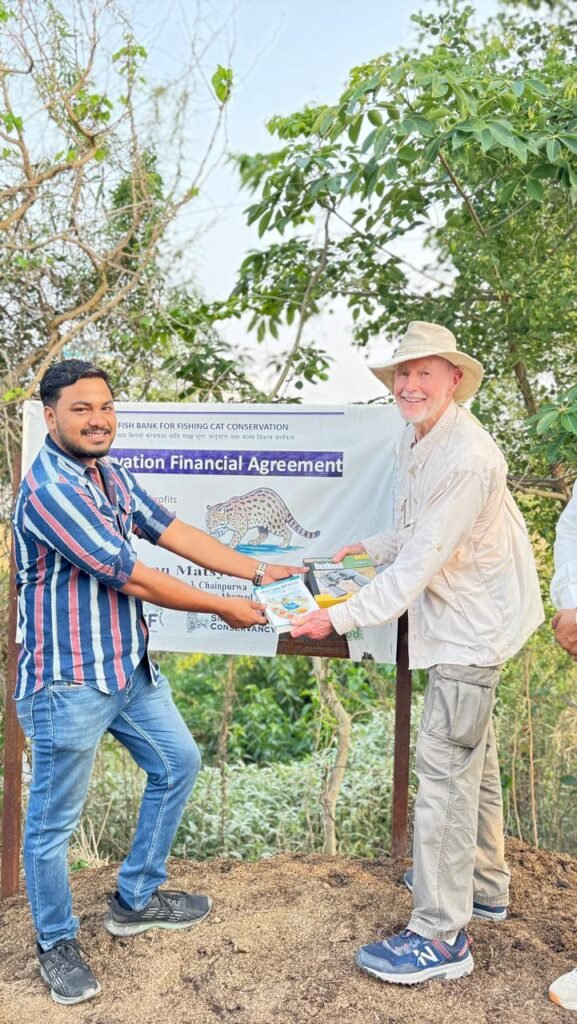
We had started the Fish Bank because fishing cats were being killed in a fish-farming landscape. Now, the son of a fish farmer from that same landscape was asking how he could dedicate his future to wildlife conservation. We gave Ari a pair of binoculars and some bird books to help him begin exploring the wildlife around him. It was another very small action, but perhaps it will create another much bigger change.
Today, the impact of the Fish Bank cannot be measured only by the number of fish fingerlings we have provided. Its real impact can be seen in changing attitudes, safer fishing cats and communities that are increasingly taking ownership of conservation. The Fish Bank has taught us an important lesson. We do not need to stop a fishing cat from behaving like a fishing cat. It is a predator, and catching fish is part of its natural life. We also cannot expect a farmer to repeatedly lose part of their livelihood and simply accept the cost of conservation.
Instead, we can change the conditions that create conflict.
A few fish fingerlings may seem like a very small intervention. But when that intervention addresses the real reason behind a conflict, its influence can travel much further.
Loss can become tolerance. Tolerance can become participation. And participation can become stewardship.
In Kapilvastu, that simple idea is creating a new chapter in coexistence between people and fishing cats.