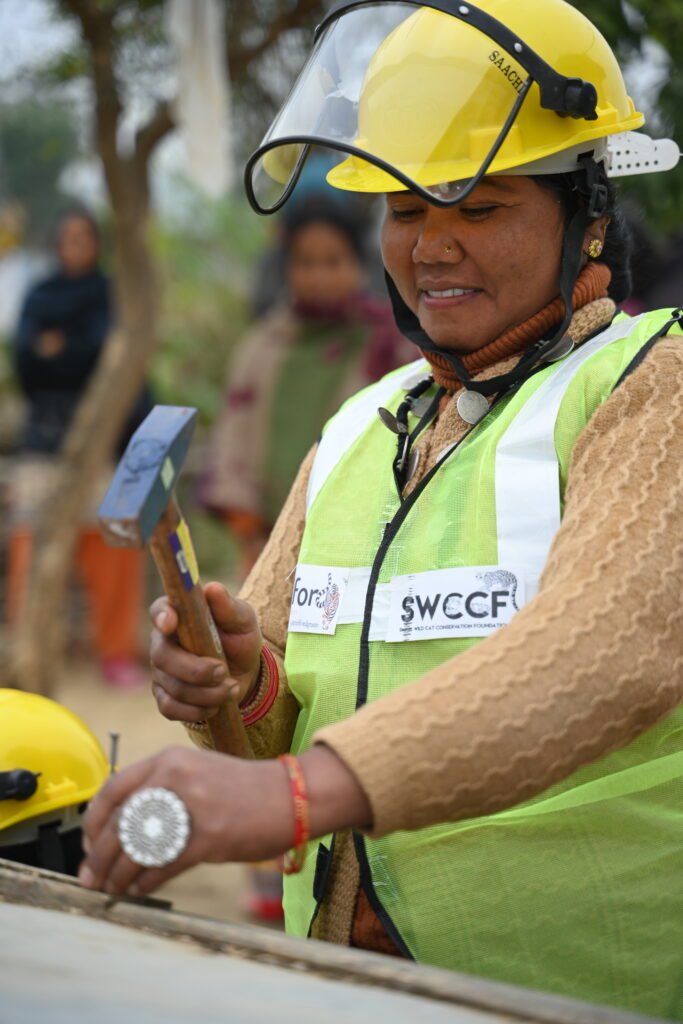
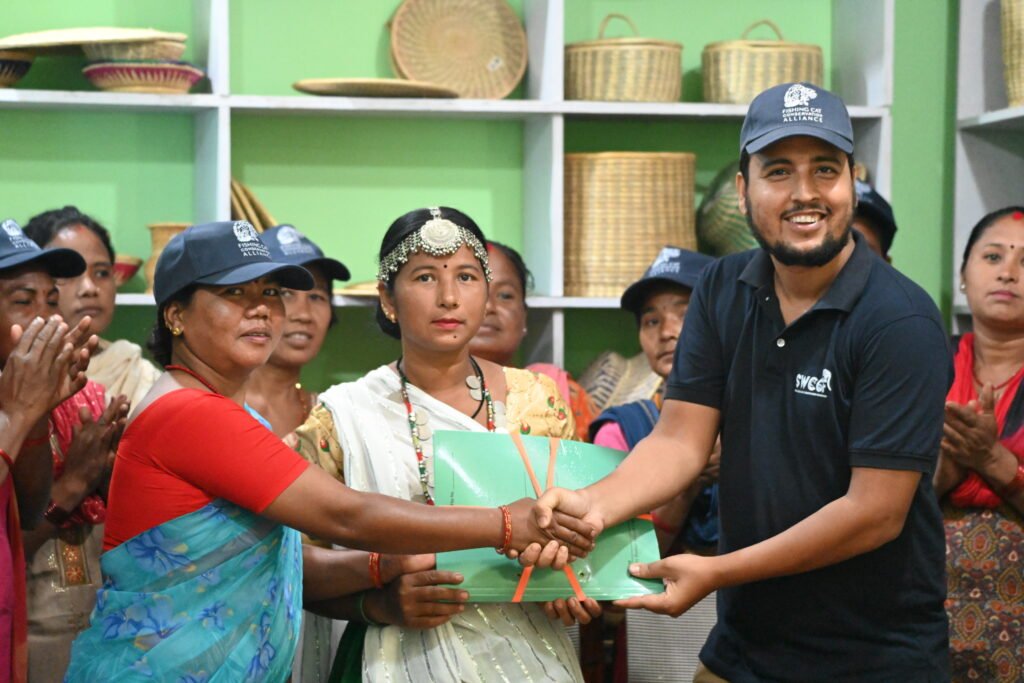
Smiling warmly as she shakes my hand, Sushila Tharu stands as a symbol of strength and change in her community. She is the leader of our women’s handicraft group and one of the strongest supporters of Fishing Cat conservation in her village. But her life was not always like this. Before joining the handicraft program, like many women in her community, Sushila depended heavily on forests and wetlands for survival. She often went fishing and collected natural resources to support her family. Life was difficult, income was unstable, and her family faced many hardships. “Before this program, I always depended on the forest and fishing. We had no stable income, and my family faced many problems,” she recalls. Poverty and limited opportunities pushed many families to depend heavily on natural resources, making conservation difficult when daily survival itself was a challenge
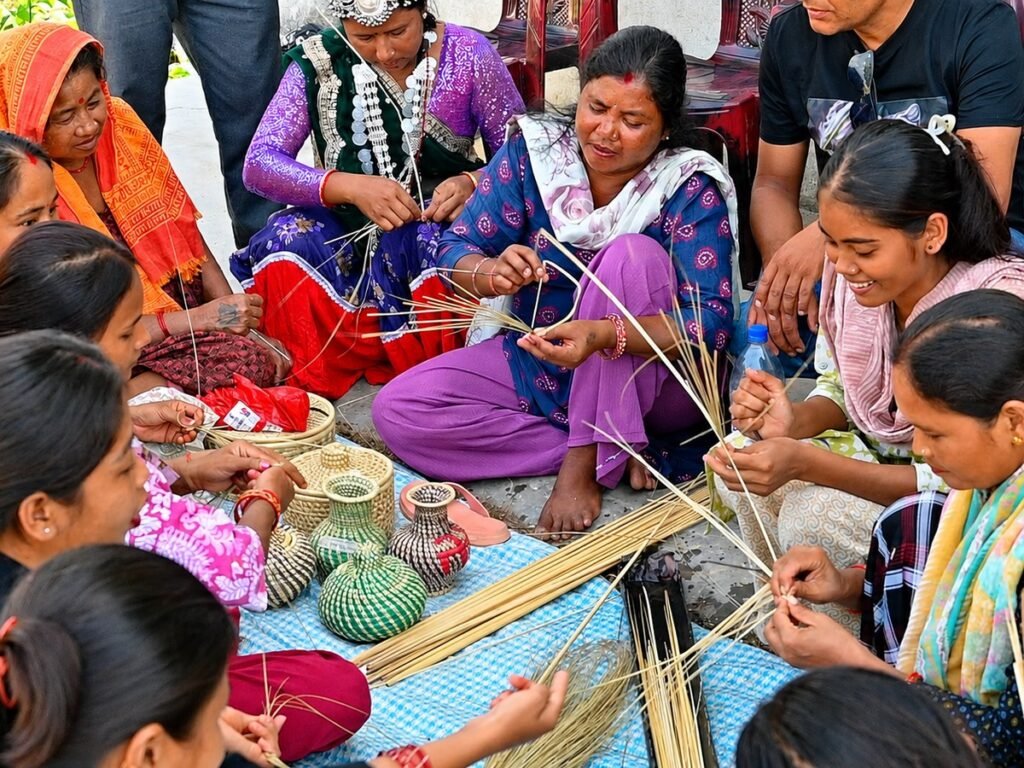
To address this problem, our project built on a skill the women already had the traditional knowledge of handicraft making. We organized around 20–25 Tharu women, including mothers, sisters, and daughters-in-law, into a handicraft group and supported them with training, group formation, and market access so they could produce and sell handicrafts together. This simple initiative brought remarkable change. Today, Sushila earns at least NPR 30,000 per month, helping her support her family, educate her children, and manage household expenses. She also shares that due to severe economic hardship, even her family had once been involved in harmful forest-related activities. “My husband and I were involved in bad activities in the past because our situation was difficult,” she says. “Now we work together, support each other, and help our children build a better future.” The program not only improved livelihoods but also restored dignity, confidence, and hope among the women.
More importantly, the handicraft group became a powerful conservation model. Each member contributes 5% of her handicraft income to a Fishing Cat Conservation Fund, which supports local conservation activities and helps protect fishing cats in the village. This created a strong link between livelihoods and conservation: when communities benefit, they become active protectors of wildlife. As women’s income improved, dependence on forests and wetlands decreased, and attitudes toward wildlife gradually changed from conflict to care. Today, women like Sushila have become guardians of nature, leading conservation efforts within their community. Their story shows that conservation is not only about protecting animals it is also about improving people’s lives. Through handicrafts, these women are doing more than weaving products; they are weaving hope for their families, their community, and the future of fishing cats.